Tango: esencia Argentino-Uruguaya
--------------------------------------------------------------------------------
Historia del Tango
El tango nació en Buenos Aires hacia fines del siglo XIX. En este entonces era una ciudad en expansión con una enorme tasa de crecimiento demográfico debido a la emigración en varios países europeos. Franceses, italianos, españoles, británicos, suizos, alemanes, húngaros, polacos, eslavos, rusos y judíos era parte de esta corriente migratoria hacia la Argentina. Los inmigrantes europeos y los porteños (aquellos nacidos en Buenos Aires) conformaron un nuevo grupo social. Tal vez como una forma de identificarse como un grupo de pertenencia en su nuevo hogar, comenzaron a crear expresiones culturales derivadas de esta mezcla. Así fue como comenzó el tango, caracterizado por sus códigos extremadamente cerrados, que solo era accesibles a las clases trabajadoras. La sociedad en la que nació el tango escuchaba y bailaba polcas, mazurcas, havaneras y valses.
Alguien dijo –el tango es algo más que una suave ola convertida en música, es la danza más profunda del mundo-, y quien dijo estas palabras no fue un argentino. La verdad, es que debe reconocerse que es el ultimo paso en la evolución del baile al menos en lo que se refiere a bailes de parejas. Lo que comenzó como una danza llego a su mayor evolución de la mano de grandes hombres, quienes capturados por el crisol popular, capturaron lo más rico de la cultura de Buenos Aires en sus composiciones. La letras de los tangos se refieren a la ciudad y sus memorias. Por lo que se convirtieron en un retrato de Buenos Aires y de su gente. En la actualidad esta magnifica música es bailada en todo el mundo. Algunos grandes cantantes y músicos de tango han sido Carlos Gardel, Pedro Chemes Quartet, Anibal Troilo, Astor Piazzolla, Juan D´Arienzo, Osvaldo Pugliese y Carlos Di Sarli.
Hoy, si estas buscando tango tienes que visitar el colorido barrio de La Boca (donde el tango nació) con parejas bailando en la calles para la gente, y bares y restaurantes con sus propios shows de tango.
--------------------------------------------------------------------------
Tango was born in Buenos Aires toward the end of the XIX century. It must be said that turn-of-the-century Buenos Aires was an expanding city with an enormous demographic growth rate, sustained above all by emigration originating in several European countries. French, Spaniards, Italians, British, Swiss, Germans, Hungarians, Polishs, Slavs, Russians and Jews were part of this migratory current towards Argentina. Those who lived there, European immigrants and some disadvantaged porteños (born in Buenos Aires) made up a new social class. Perhaps as a way of identifying themselves as a group and of feeling they belonged in their new home, they began to create cultural expressions derived from this mixture. This was the start of tango, characterized by its extremely closed codes, which were only accessible to the working classes. The society into which tango was born listened and danced to polkas, mazurkas, havaneras, and waltz.
Somebody said: -Tango is something else than a soft wave turned into music, it is the deepest dance in the world -, and he who spoke these words was not Argentine. The truth is that it must be acknowledged that it represents the last step in the universal dance evolution as regards dances of mixed couples. What started with dance was eventually coming of age in the expert hands of great men, who, inspired in the popular melting pot, captured the richest part of the Buenos Aires culture in their compositions. Themes always refer to the ordinary man and his problems, the city and memories. Thus, tango becomes a portrayal of Buenos Aires and its people. For this reason, undoubtedly, since the best of the Buenos Aires culture is carried in each song, tango gained ground abroad. Some tango musicians and singersare Carlos Gardel, Pdro Chemes Quartet, Anibal Troilo, Astor Piazzolla, Juan D'Arienzo, Osvaldo Pugliese and Carlos Di Sarli.
Today, if you’re looking for tango you have to visit the colorful La Boca neighborhood (the place where the tango was born) with people dancing in the streets, offering great shows. And bars and restaurants with tango shows.
http://cometoargentina.tripod.com/
VIDEOS
TANGO EN LAS CALLES DE BUENOS AIRES
[YOUTUBE]UdQYdO-FhJQ[/YOUTUBE]
[YOUTUBE]R8TQOtXe1w[/YOUTUBE]
El genio de Astor Piazzolla (uno de los grandes del tango Argentino) y su banda tocando en un recital en Alemania en el 88:
[YOUTUBE]BhOKZjh6qes[/YOUTUBE]
Uruguay's Tango Culture
Tango, a central part of Uruguay's culture.
It is a common mistake to say that Tango is the music of Argentina. Tango is the cultural expression of the Rio de la Plata, which includes Buenos Aires, Rosario and Montevideo. Uruguay itself was undergoing a massive immigration during the later part of the 1800s and early 1900s. The intermixing of African, Spanish, Italian, British, Polish, Russian and native-born Uruguayan people resulted in a melting pot of cultures; The newcomers brought with them to their new home their music, their musical instruments and their dances. Soon the music from the Argentine countryside, the African- influenced milonga, was enriched by its exposure to the newly-arrived polkas, mazurkas, and eventually the Habanera and the waltz. Afro Argentinean steps and rhythms started to mix with European music and choreography.
Most likely the tango was born in dance venues attended by compadritos, young men, mostly native born and poor, who liked to dress in slouch hats, loosely tied neckerchiefs and high-heeled boots with knives tucked casually into their belts. The compadritos introduced tango to various low-life establishments where dancing took place: bars, dance halls and brothels. It was here that the African rhythms met the Uruguay milonga music (a fast-paced polka) and soon new steps were invented and took hold.
The Tango started as a cheerful music danced and played in the slums, and could often be heard in the bordellos. Them Tango moved slowly from the slums to the Barrios, or working and middle class neighborhoods. It was through the performances of the Organitos (portable organs ) by itinerant Italians that the tango got into homes. By the beginning of the 20th century, tango was moving from the outskirts to downtown.
Suddently tango was no longer an expression of "compadritos" and rough guys, This evolution, with its many changes and rich processes, is known as the Golden Age of Tango. Tango start to talk about the most universal issue that relate men and women: Love. The pure love from the mother and the "Eden" that was the "barrio", that neighborhood, a safe space where pure sentiments happens. The other love was the love from the "minas", women from downtown, always ready to leave a man "amurado" (abandoned) for another one.
Buenos Aires used to have a great gender imbalance. So, many men found themselves alone. Prostitution was very popular at that time. Thousand of young Europeans were traded. Big and well organized mafias, (like the French and the Jewish-polish) operated in the Rio de la Plata until late the 20ies.
Solitude and loneliness is other important issue in tango culture along with sadness, probably the worst sadness that comes from sex without love. The rupture of the couple, missed friends, lost streets and barrios, memories from the past feed the lyrics of tango since 1917, when Gardel sang "Mi noche triste" (My sad night).
Carlos Gardel
Carlos Gardel is perhaps the most prominent figure in the history of Tango. Born in Tacuarembo, Uruguay, Gardel is known as The King of Tango or "el zorzal criollo". The unerring musicality of Gardel’s baritone voice and the dramatic phrasing of his lyrics made miniature masterpieces of his hundreds of three-minute tango recordings. Together with lyricist and long-time collaborator Alfredo Le Pera, Gardel wrote several classic tangos, most notably: Mi Buenos Aires querido, Cuesta abajo, Amores de estudiante, Soledad, Volver, Por una cabeza and El día que me quieras. Here is Gardel singing "Cuesta Abajo":
www.geocities.com/.../7187/tango-uruguayo.htm
CHARRUA( uruguaya ,oriental o yorugua)------------------la primer CHARRUA( uruguaya ,oriental o yorugua) que fue jurado del Metropolitano de Tango y del Jurado Mundial ,por merito propio,ahora seleccionada como "maestra reconocida mundialmente",dara un Seminario de Alta Intensidad en el Mundial.No solo es futbol mundial el Uruguay."Tanguera Ilustre de Buenos Aires" "Condor de Oro de San Luis,Argentina....Quien es? L.L. pasion,voluntad y tecnica.Tecnica,voluntad y pasion.Abriendo caminos para Uruguay,embajadora cultural de este Paisito que es un gran Pais con mayuscula. --
Ver .The one,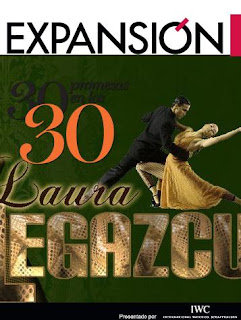


No hay comentarios:
Publicar un comentario